

Quick Answer: Not usually, and not directly. Hormone replacement therapy (HRT) isn’t a weight-loss treatment. A Cochrane review of 22 trials found no evidence that it causes extra weight gain, and The Menopause Society says it may slightly limit the belly fat and weight gain that come with menopause. Any larger change usually has to come from daily habits, which symptom relief may make easier to keep.
In this article
- Does Hormone Replacement Therapy Cause Weight Loss?
- Is It Normal to Gain Weight When You First Start HRT?
- Can HRT Help With Belly Fat?
- How Long Does It Take to Notice Any Change?
- Why Do Some Women Lose Weight After Starting HRT?
- Does Testosterone Therapy Help Men Lose Weight?
- What Helps With Weight During Menopause?
- How Omnia Approaches Hormone Therapy and Weight in Encino
- Frequently Asked Questions
- Watch the Video or Listen to the Podcast
- Book a Consultation in Encino
If you’ve started hormone replacement therapy and you’re watching the scale, you’re asking a fair question. At Omnia Wellness Center in Encino, we’re glad to talk it through, whether you’re asking “Will this help me lose weight?” or “Why haven’t I lost anything yet?”
The honest answer is that HRT is prescribed to treat menopause symptoms, not to change your weight. The reviewed evidence found no extra weight gain compared with not using it, and it may take a little off the edge of midlife weight gain, with the biggest effect on where fat settles instead of how much you weigh.
Below, we walk through what the research shows, why the early months can look confusing, what helps with weight during menopause, and how we approach it at our Encino clinic.
Does Hormone Replacement Therapy Cause Weight Loss?
No, not on its own. The Menopause Society’s 2022 Hormone Therapy Position Statement puts it plainly: estrogen-progestogen therapy either has no effect on weight or is linked with less weight gain in women who use it than in women who don’t. That’s a statement about limiting gain, not producing loss.
The clearest numbers come from a Cochrane review by Norman, Flight, and Rees, which pooled 22 randomized trials. Women on combined estrogen and progestogen gained 0.47 kg less on average than women not on HRT, a difference too small to be statistically significant. The reviewers concluded that these regimens don’t cause extra weight gain beyond what is normally gained at menopause.
So if you started HRT hoping it would do the work of a diet, it won’t. If you avoided it because you were afraid of gaining weight, the research doesn’t back that fear either.
Is It Normal to Gain Weight When You First Start HRT?
Some women notice the scale move up after starting, and The Menopause Society lists weight gain, bloating, and fluid retention among the more common side effects of hormone therapy. Some of these, like bloating and fluid retention, aren’t fat gain, and they’re worth mentioning to your provider so your dose or formulation can be reviewed.
It also helps to know what midlife does on its own. According to The Menopause Society, the average weight gain during midlife and the menopause transition is about 1.5 lb per year, and weight changes tend to flatten out roughly 2 years after the final menstrual period. Starting HRT during that window can make it feel like the therapy caused a gain that was already underway.
The National Institute on Aging puts the average age of menopause in the United States at 52, and notes that fat distribution changes and women may gain weight more easily around that time. Persistent or unexplained weight change deserves a closer look from a licensed medical provider, with or without HRT.
Can HRT Help With Belly Fat?
Possibly, in a modest way. The Menopause Society’s position statement says hormone therapy may help limit abdominal fat accumulation and the weight gain associated with the menopause transition, but it adds that the effect is small. Abdominal fat is the one measure where the research suggests HRT may have a small effect.
Evidence from the Women’s Health Initiative (WHI) points the same way. Women randomized to hormone therapy had no statistically significant difference in weight gain compared with placebo, but they did show a lesser increase in waist circumference over the first 3 years of use.
In plain terms, the scale may hold steady while the waist changes slightly. The Menopause Society’s patient guidance on midlife weight gain explains why. Aging is the primary driver of weight gain, while menopause redistributes fat toward the abdomen. Hormone therapy may slightly soften that shift, not reverse it.
How Long Does It Take to Notice Any Change?
There’s no reliable timeline for weight changes on HRT, because weight isn’t what the therapy targets. Hot flashes and sleep are the outcomes hormone therapy is prescribed for, and those are what your provider will track first. The evidence doesn’t establish when, or whether, your weight will change.
In the WHI data above, the waist-circumference difference was measured over 3 years, not 3 weeks. If you’re looking for a sign that HRT is working, look at your sleep and your hot flashes before you look at the scale.
Give any new regimen time, and tell your provider what you notice, including early bloating or weight shifts, so adjustments can be made with a full picture.
Why Do Some Women Lose Weight After Starting HRT?
It happens, and it’s usually indirect. The Menopause Society’s guidance says HRT isn’t a direct weight-loss treatment, but it relieves hot flashes, sleep disturbances, and mood swings, which can make lifestyle changes more manageable. Symptom relief may make healthy habits easier to keep up.
Think about what broken sleep does to a week: less energy for a workout and more reaching for quick food. When sleep improves, those habits can improve with it. The weight loss belongs to the habits. HRT can make them easier to keep.
The same guidance notes that some studies suggest hormone therapy may slightly reduce fat storage in the abdomen and help preserve muscle, with modest effects. Preserving muscle matters more than it sounds, because women naturally lose muscle at a rate of 3% to 8% per decade after age 30, and muscle burns more calories at rest than fat does.
Does Testosterone Therapy Help Men Lose Weight?
Testosterone replacement therapy for men is prescribed to correct a diagnosed deficiency, not to lose weight. The Endocrine Society recommends diagnosing low testosterone only when a man has symptoms plus unequivocally and consistently low testosterone levels, confirmed by repeating a fasting morning test, and starting therapy only after a discussion of benefits and risks.
There’s a twist that surprises people. In its 2026 statement on testosterone replacement therapy, the Endocrine Society says that when low testosterone is caused by being overweight or obese (a BMI over 27) with no other identified cause, weight loss is typically the first-line therapy. In other words, for some men, losing weight is the first step, not the hormone.
That’s why TRT requires a prescription and proper testing. Our clinical approach to testosterone therapy starts with lab work and a symptom review, and weight isn’t promised as an outcome.
What Helps With Weight During Menopause?
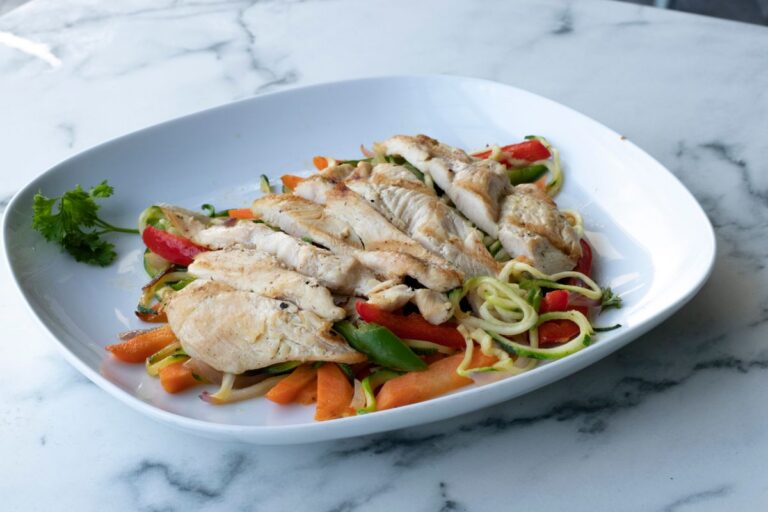
The same things that help at any age, with a few midlife adjustments. The Menopause Society’s patient guidance recommends at least 150 minutes of moderate aerobic activity a week combined with strength training twice a week, and about 1.2 grams of protein per kilogram of body weight daily to help preserve muscle.
In its position statement, the Society also notes that increasing physical activity was independently linked with less weight gain over time.
For women who need more than lifestyle changes, the Society’s guidance notes that anti-obesity medications can produce weight loss of up to 20%, with the caveat that they require long-term use because stopping often leads to weight regain. That is the category our medical weight management program falls into, and it’s a separate conversation from hormone therapy, with its own physician-directed oversight and lab monitoring.
Small changes count. For women carrying excess weight, the Society’s guidance says that losing even 5% to 10% of body weight can improve health and lower the risk of chronic disease.
How Omnia Approaches Hormone Therapy and Weight in Encino
At Omnia, we look at you as an individual, and weight is part of that picture without being the whole of it. Hormone therapy is prescribed for symptoms, so the evaluation starts there. Before any treatment decision, our licensed medical provider reviews:
- Your symptoms and how they’re affecting your daily life
- When menopause began, or where you are in the transition
- Your personal and family medical history
- Your medications and risk factors, plus any testing that’s appropriate for you
If weight is one of your concerns, say so at the first visit. It changes the conversation, because hormone therapy for women may be one piece of a plan, and it may not be the right piece at all. If belly fat is what’s bothering you most, our perimenopause and menopause care in Encino starts with realistic expectations, so you don’t end up measuring the therapy by a number it was not designed to move.
Frequently Asked Questions
What are the first signs that HRT is working?
Symptom relief comes first. Fewer or milder hot flashes and better sleep are the outcomes hormone therapy is prescribed for. Weight isn’t one of them, so a steady scale in the first months doesn’t mean the therapy isn’t doing its job.
Which hormone will help me lose weight?
None of them is prescribed for that purpose. Estrogen therapy may slightly limit abdominal fat gain according to The Menopause Society, and testosterone therapy in men is for diagnosed deficiency, not weight. If weight loss is your main goal, ask your provider about medical weight management instead of hormone therapy.
Is there an age when it’s too late to start HRT?
Age alone doesn’t decide it. The Menopause Society says the benefit-risk balance is favorable for treating bothersome hot flashes and preventing bone loss in women under 60 or within 10 years of menopause onset who have no contraindications. Later starts are a more individual decision that depends on your health history.
Should I stop HRT if I gain weight?
Talk to your provider before changing anything. Hormone therapy can be associated with bloating and fluid retention, and a different dose or formulation may be an option. The Menopause Society notes that hot flashes return in about half of women when hormone therapy stops, so stopping on your own can bring symptoms back without addressing the weight.
Watch the Video or Listen to the Podcast
Prefer to watch or listen? The same answer on HRT and weight is available as a short video and as a podcast episode.
Book a Consultation in Encino
If you’re wondering whether hormone therapy fits your symptoms, or whether weight belongs in a different conversation, schedule a consultation to discuss your goals. Omnia Wellness Center is located at 16430 Ventura Blvd, Suite 207, in Encino. Call (818) 386-8511 or text (818) 853-1351 to request an appointment.
This article is for general informational purposes and is not medical advice. It does not replace an evaluation by a qualified licensed medical provider. Unexplained or rapid weight change should be evaluated promptly by a licensed medical provider.


