
Quick Answer: Yes, within limits. Skin-tightening lasers deliver controlled heat that can trigger collagen contraction and gradual remodeling, and the American Academy of Dermatology says good candidates have a small amount of sagging skin. Improvement tends to be modest and builds over months. Not every laser is a tightening laser, and research on Fotona4D® specifically is still small and early.
We understand the skepticism. Spend 5 minutes on social media and you’ll find before-and-after photos that seem to promise a new jawline after one appointment. So when patients in Encino ask us, “Does laser skin tightening work?”, our answer is yes, with an important qualifier: not every laser is a skin-tightening laser, and not every device works the same way.
Laser skin tightening is based on controlled delivery of energy into targeted tissue. Certain laser wavelengths create heat that can trigger collagen contraction and longer-term collagen remodeling. That remodeling matters because collagen is one of the structural proteins responsible for the firmness of your skin.
It’s also why laser tightening usually isn’t an overnight change. Your body needs time to remodel collagen, so improvement can keep developing after treatment ends.
What “work” should mean here is gradual, modest improvement for people with a small amount of sagging skin. Laser tightening isn’t the same as a surgical facelift, and the clinical evidence for some popular protocols is still thin. Below, we explain how the technology works and what realistic expectations look like.
How Does Laser Skin Tightening Work?
Every laser delivers light energy at a specific wavelength, and different wavelengths interact with tissue in different ways. For tightening, the goal is controlled heat below the surface. According to the American Academy of Dermatology (AAD), some lasers can send heat deep into the skin without wounding the top layer.
That heat can do two things. In the short term, it can cause existing collagen to contract. Over the longer term, it prompts the body’s own repair process, which gradually rebuilds and reorganizes collagen. That slower remodeling phase is why results build gradually instead of appearing right away.
At Omnia Wellness Center, we use Fotona’s Nd:YAG and Er:YAG laser platform. It pairs two wavelengths, Nd:YAG at 1064 nm and Er:YAG at 2940 nm, and your provider chooses how they’re used after evaluating your skin. Technology matters, but so does the person evaluating your skin and choosing the settings.
What’s the Difference Between Tightening and Resurfacing Lasers?
The two terms get blurred in advertising, so here’s how they differ, using the AAD’s descriptions where it gives them.
- Non-invasive laser tightening heats deeper skin while leaving the surface intact. The AAD says you may need 3 to 5 treatments, and that results gradually appear between 2 and 6 months after the last treatment.
- Laser resurfacing works on the skin’s surface. The AAD groups it with minimally invasive skin tightening procedures and calls it the most effective procedure for tightening loose skin. It involves a healing period, and it carries its own risks to discuss at a consultation.
That tradeoff sits at the center of the decision. Resurfacing can do more for loose skin but asks more of your schedule and your healing. Non-invasive tightening tends to fit more easily into daily life, and its changes are more gradual and more modest.
Fotona4D® sits somewhere else again. It’s a multi-step treatment protocol that combines heating steps, including one performed inside the mouth, with a light Er:YAG peel. It isn’t full ablative resurfacing, so the AAD’s statement about resurfacing shouldn’t be read as a statement about Fotona4D®.
Does Laser Skin Tightening Work? What the Research Shows
The AAD includes non-invasive laser tightening among its options for firming sagging skin and describes results as gradual. That’s a reasonable basis for a qualified yes.
For Fotona4D® specifically, the clinical evidence is still thin. One uncontrolled study followed 14 participants through the four-step, dual-wavelength protocol and examined skin changes under the microscope. A randomized split-face pilot study of 20 participants looked only at the Er:YAG mode used in the first step, comparing it applied inside the mouth on one side of the face with the outer skin on the other, for the folds between the nose and mouth. A prospective observational study of 13 participants used 3D imaging after Nd:YAG and Er:YAG tightening treatments. Each had short follow-up. A 2026 paper also noted a lack of well-designed clinical studies on laser treatment performed inside the mouth.
What does that mean for you? These studies are too small and too short to tell anyone how much improvement to expect or how long it lasts. We think that’s worth saying plainly. At Omnia, we want you to walk in with realistic expectations, because a modest change you expected feels very different from a dramatic one you were promised and didn’t get.
When Will You See Results, and What Do They Look Like?
Laser tightening is gradual by design. The AAD says results gradually appear between 2 and 6 months after the last treatment. For Fotona4D®, Fotona, the manufacturer, describes the full effect developing gradually over 2 to 3 months.
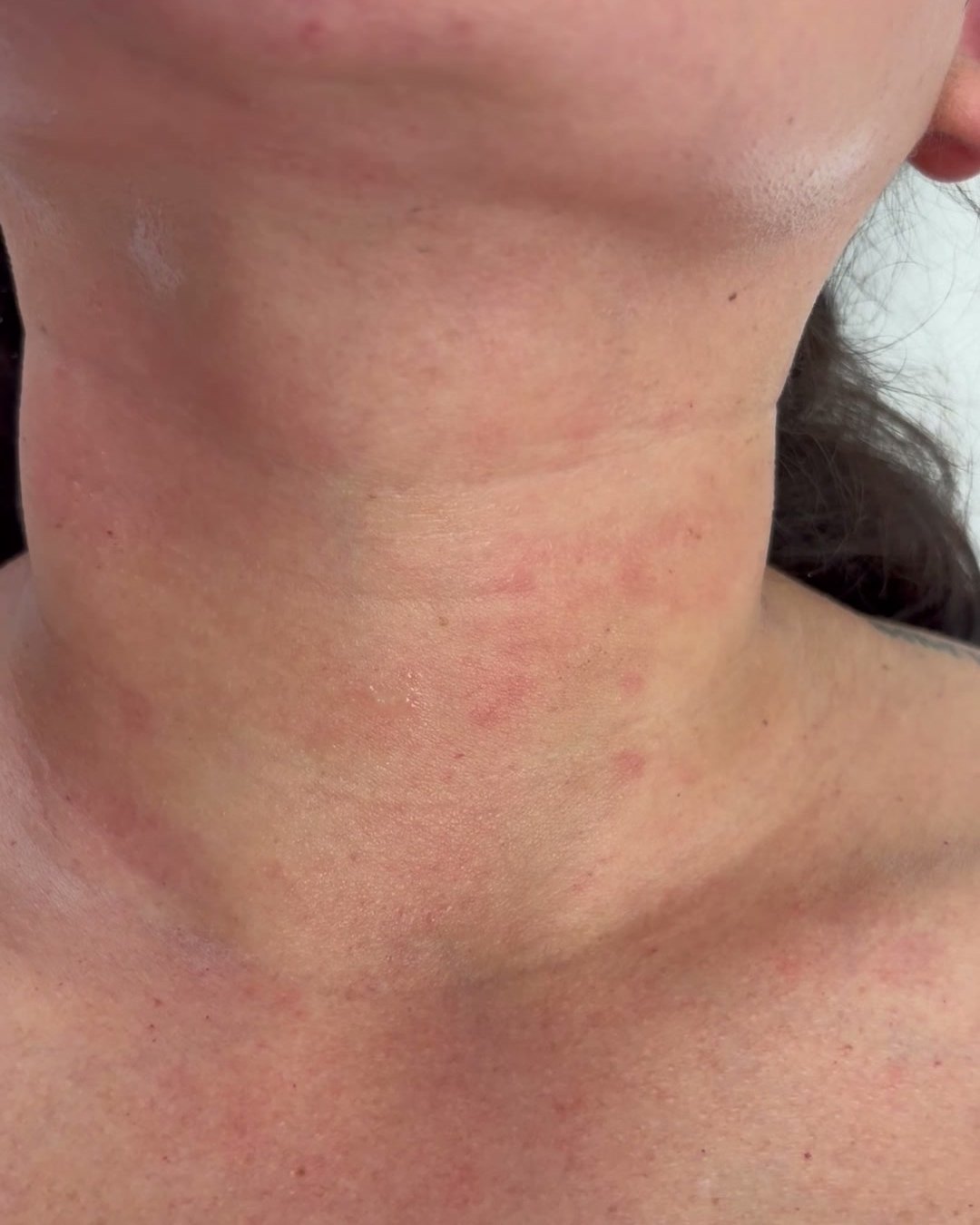
When treatment goes the way we hope, the change is typically subtle: skin that looks a bit firmer and a little more refreshed. You should still look like you. Your skin also keeps aging after treatment, and laser tightening doesn’t pause that process.
Are You a Good Candidate for Laser Skin Tightening?
The AAD says good candidates for skin tightening have “a small amount of sagging skin.” It also asks a direct question: “Do you have lots of sagging skin? If so, skin-tightening may not be helpful.”
In plain terms, laser tightening is generally a better fit for a small amount of sagging than for a lot of it. If you have a lot of loose skin, a consultation with a board-certified plastic surgeon about surgical options is one reasonable conversation to have, and we’re comfortable telling you that.
Your skin type and health history also factor in, and those can only be assessed in person. Every candidacy decision at Omnia starts with an evaluation of your face and your goals.
Frequently Asked Questions
How many laser skin tightening treatments will I need?
It varies. The AAD says non-invasive laser tightening may take 3 to 5 treatments. For Fotona4D®, Fotona describes a series of commonly 3 to 7 sessions scheduled 4 to 6 weeks apart. Your provider sets the number after evaluating your skin.
How long do results last?
There isn’t a reliable single answer. The published Fotona4D® studies have short follow-up, so they can’t say how long results last, and your skin continues to age after treatment. Whether maintenance treatments make sense for you is something to discuss at your consultation.
Does laser skin tightening hurt?
Comfort varies from person to person and depends on the area and the settings used. We talk through what you may feel before treatment begins, so you know what to expect.
Is laser skin tightening a one-time fix?
No. It prompts your body to remodel collagen over time, but it doesn’t pause the aging process, and results tend to build across a series instead of after one visit. Your provider can explain what a realistic plan looks like for your skin.
Book a Consultation in Encino
If you’re wondering whether laser tightening fits your skin, an in-person evaluation is a useful next step. Omnia Wellness Center is at 16430 Ventura Blvd, Suite 207, Encino, in the San Fernando Valley. Schedule a consultation to discuss your goals and whether laser tightening or another approach makes sense for you. Call (818) 386-8511 or text (818) 853-1351.
This article is for general informational purposes and is not medical advice. It does not replace an evaluation by a qualified licensed medical provider. Individual results vary.
Sources
- American Academy of Dermatology, “Many ways to firm sagging skin”, accessed September 2026
- Fotona, “Fotona4D®”, accessed September 2026
- Shanina NA, Patrushev AV, Zorman A, Journal of Cosmetic Dermatology (2021), “Histological and immunohistochemical changes in facial skin treated with combined ablative and non-ablative laser therapy”, accessed September 2026
- Moftah N, Samy N, Allam RSHM, et al., Skin Research and Technology (2020), “Optical coherence tomographic (OCT) evaluation of intraoral non-ablative erbium: YAG laser (SMOOTH mode) in rejuvenation of nasolabial folds; A prospective randomized split face comparative pilot study”, accessed September 2026
- Qi J, Wang Q, Huang L, et al., Lasers in Surgery and Medicine (2026), “Three-Dimensional Imaging of Dynamic Changes After Nd:YAG/Er:YAG Laser Skin Tightening: A Prospective Study”, accessed September 2026
- Miron RJ, McGilvray E, Paz AG, et al., Journal of Cosmetic Dermatology (2026), “Intra-Oral Lasering for the Treatment of Nasolabial Folds, Marionette Lines, and Jowls: Case Examples and Protocol Methodology”, accessed September 2026


